


Chris 73 discusses the transformation of her career, the relationship between contrast and awareness, Australia’s techno scene, industry metrics and the path toward a distinct artistic identity.
You already had a long career as a DJ before creating Chris 73. What did you feel you needed to transform or do differently to begin this new phase of your career?
Chris 73: Back then, my goal as a DJ was simple: get the floor dancing by playing whatever the pop charts were serving that month. I was always watching what the big pop stars were releasing, chasing the remix that was landing with the crowd, and playing it. People enjoyed it, but over time I started to see it as empty — at the end of the night, people would go home saying the DJ played their favourite pop star's track, not anything of mine. I still want the floor to dance, that still matters, but I wanted more: I wanted the music to carry a message, to make sense, to spark reflection — for people to feel something in what I produced, to remember the track, to walk away turning an idea over in their head. I wanted my music to unsettle you philosophically before it set you free with insight. Chris 73 was born from that need to turn DJing into a vehicle for reflection, not just entertainment. Today I bring themes into my music that matter to me — I speak about things that make sense to me. That's when contrast became the center of everything I do. For attentive ears, my music can be a source of insight. That's what I work for.

In a short time, your tracks started appearing in the Beatport charts and getting support from artists like Joseph Capriati and Paco Osuna. At what point did you realize the project had stopped being just a personal new phase and had started catching the industry's attention?
Chris 73: Well, I am in this journey for about 17 years. But since I rebranded, the moment that still stays with me was discovering that Richie Hawtin and Joseph Capriati had downloaded the “No Time To Waste” EP. With Richie being a direct reference point from Detroit — the place I'd visited just months earlier to understand techno's roots — that felt like a circle closing for me. That's when I realized the message was reaching the people I respected most, and that the project had moved out of my head and into the real conversation happening in the scene.
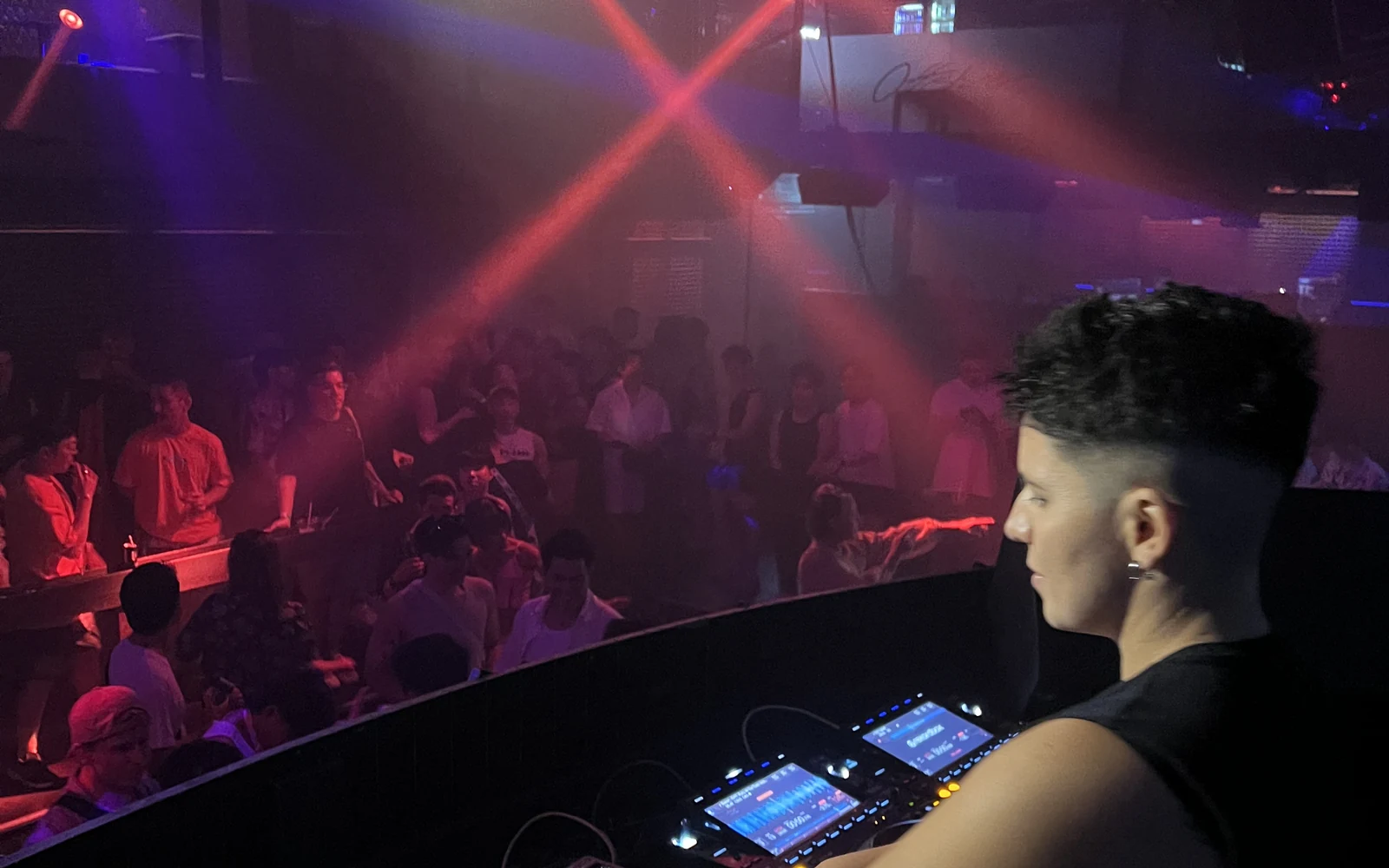
Your titles — “No Time To Waste”, “You Know Nothing”, “Open Your Mind” — read almost like chapters of the same conversation. Is there a bigger story being built through these releases, or does each track come from an independent moment in your life?
Chris 73: There is a bigger story, yes — not because I planned a fixed script, but because every track comes from the same place of inner inquiry and self-knowledge, so they end up connecting like chapters. “No Time To Waste” is the alarm: stop and notice time. “You Know Nothing” is the humility that follows the alarm, inspired by Socrates — the moment you admit that real wisdom starts with recognizing your own ignorance. And “Open Your Mind” is the consequence of that: once you've stopped and allowed yourself not to know, you can finally open up to seeing differently. It's basically the backbone of my own line: contrast births awareness, and awareness is the key to transformation. I'm someone who loves self-development and human growth, and through my work I try to share the thoughts that, at some point, were powerful insights that changed the course of my own story.
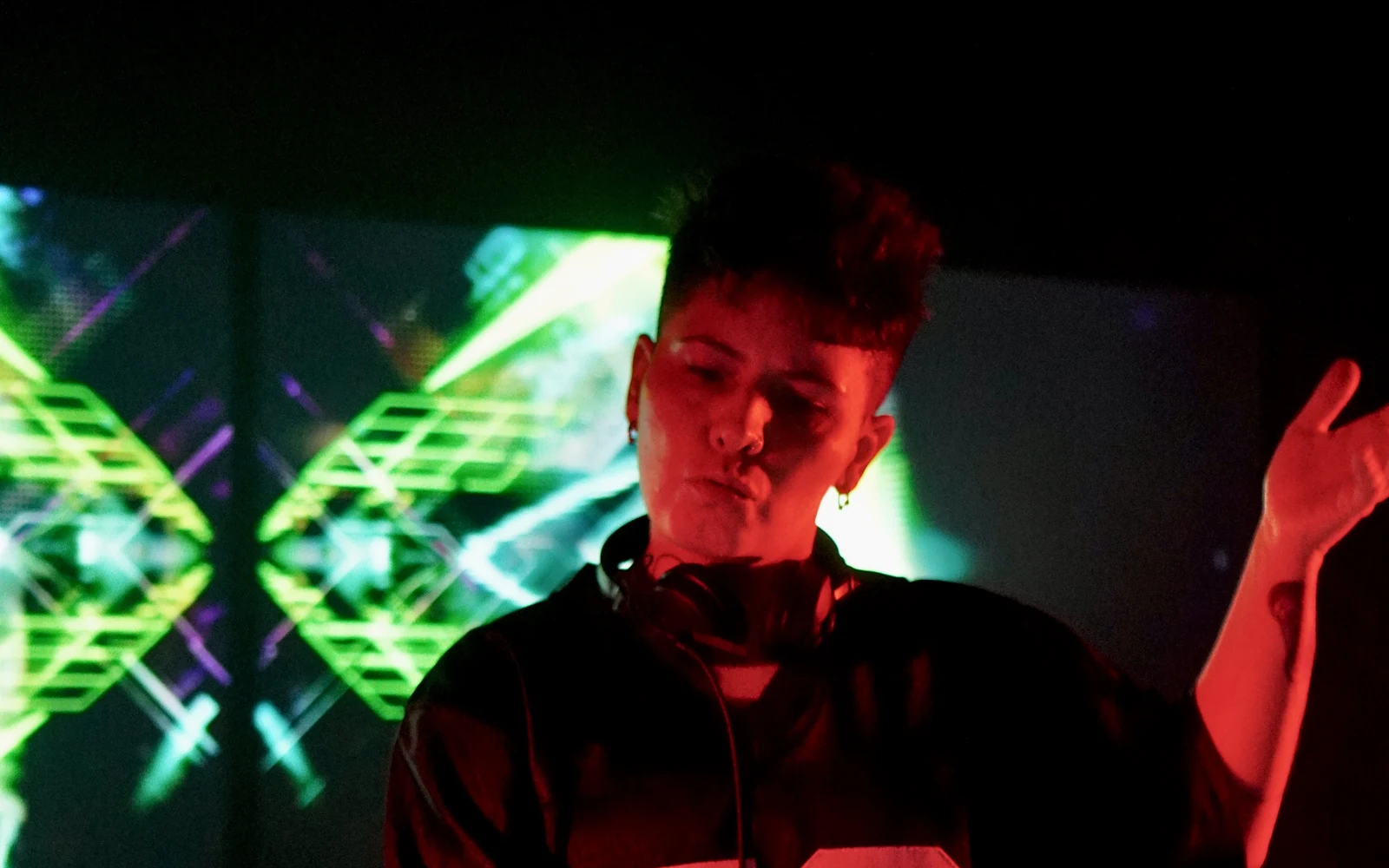
You live in Australia, a country geographically far from the main European techno circuits. Does that distance limit an international career, or does Sydney today offer a scene strong enough to build a global artist from there?
Chris 73: I see Sydney as the laboratory and the world as the destination. The scene here is small compared to Europe's, but that's exactly what gave me the freedom to experiment, test my sound and build an identity without everyone watching. Playing alongside Oliver Huntemann, Space 92 and Mha Iri made it clear that geographic distance isn't what decides whether you get a seat at the table — consistency of work is.
For someone looking in from outside, how would you define the Australian techno scene today? What happens on the dance floors of Sydney or Melbourne that European and Brazilian audiences probably don't picture?
Chris 73: The Australian scene today is small but resilient — and that changes the energy on the floor. We don't have the club infrastructure Europe has, so every event feels almost like an act of collective resistance: promoter, DJ and crowd all know nothing is guaranteed, and the floor pays that back with a different kind of energy. The contrast that stands out most, though, is a different one: DJs who only play are everywhere here, and DJs who also produce are only a few, but DJ/ Producer that are loyal to their own inner self are rare — and that's exactly the profile missing to sustain a sound identity of our own. Meanwhile, electronic music consumption in the country is huge — Spotify numbers put Australia among the countries that listen to the genre the most, even with a relatively small base of producers. And there's an interesting historical pattern: whenever an Australian DJ breaks through the bubble, they leave the country — that's what happened with Fisher, Timmy Trumpet, Dom Dolla, and also with Mha Iri, who, although not Australian-born, grew up inside the Melbourne scene. That shows the size of the local ceiling: historically, anyone chasing real scale has had to look outside. It's a curious landscape: a huge, hungry audience, few producers, rare artists, and an almost natural exit route for anyone who grows big enough.

Australia is also dealing with issues like club closures, legislation, high event costs and changes to nightlife. How have these shifts affected floor culture and the lives of people who work professionally as DJs there?
Chris 73: Club closures and the high cost of running events have deeply changed how the scene organizes itself here. A lot of what used to happen in clubs has now moved to warehouses, lands, independent events — which, on one hand, made things more expensive and harder for whoever is producing the party, but on the other forced the scene to get more creative and less dependent on traditional infrastructure. For anyone playing professionally, that means fewer fixed dates and more financial unpredictability, but it also means that whoever survives this landscape builds a more genuine relationship with the audience, because every event is earned, not repeated out of habit.
You've been through phases when your career wasn't moving forward the way you expected. What would you do completely differently if you could go back to the Chris who was trying to carve out space in the scene ten years ago?
Chris 73: I would have trusted formula less and trusted contrast and self-knowledge more — that's the foundation of everything. For a long time I tried to play it “right”, inside what the scene expected, and that left me technically competent but artistically invisible. Going back ten years, I'd tell that version of myself: stop trying to fit in, start building what only you can deliver — that's what separates someone who plays in a scene from someone who builds one.

Today the electronic music industry puts a lot of weight on numbers — chart positions, streams, followers, social reach — and these indicators end up shaping opportunities, bookings, and even how an artist's relevance is perceived. How do you see that logic? How much do these numbers matter to you, and in your view, how do you find a balance where they're considered without the value of the music and the artistic identity taking a back seat?
Chris 73: Numbers without context don't mean relevance — they mean reach, which is a very different thing. I've seen great tracks with zero playlist support, and generic ones sitting at the top of the chart. What actually interests me is consistency of message: if in two or three years people still associate my name with a clear idea — contrast, awareness, transformation — that's worth more than any chart position in any given month. Balance, to me, means letting the numbers inform the strategy without ever letting them write the music.
After “Open Your Mind”, which seems to mark an evolution toward a more peak-time, driving techno, what's the direction from here: deepening that identity, or continuing to move between different strands of techno?
Chris 73: My pursuit of more peak-time, more driving compositions is going to continue — but that doesn't mean abandoning the more hypnotic, minimal root that came before. I see it as expanding the vocabulary within the same message: contrast is also this — moving between density and impact without losing the philosophical spine that holds everything together. From here, I want to go deeper into that driving side without becoming predictable — intensity can carry introspection too.

If we talk again three years from now and you say “Chris 73 got exactly where I wanted her to be”, what will have happened in that time — what label, stage, project or achievement would make you feel that this transformation worked?
Chris 73: It wouldn't be a chart position or a follower count — it would be knowing that, three years from now, there are people building their own awareness through my music, without me needing to be on stage for that to happen. If “contrast births awareness, and awareness is the key to transformation” becomes something people repeat because they felt it, not because they read it in a caption, that's when I'll know Chris 73 got where she needed to be. Everything else — chart, stage, label — is simply the result of building, consistency, discipline, persistence and patience. Qualities I carry.
You've been going through an important phase doing warm-ups for internationally renowned artists. How do you prepare for each one — do you change your repertoire, intensity, or the way you build your set depending on the headliner? And what still needs to happen for you to reach headliner status, or even run a whole night as an all night long?
Chris 73: Doing warm-ups for names like Oliver Huntemann taught me that this role isn't “playing before the main act” — it's laying the ground the whole night is going to stand on. I study the headliner's repertoire before building my set: I try to understand where they usually take the energy, and I build my set as a ramp, not a standalone show. That sometimes means playing more minimal, more spacious, to leave room to breathe, and other times planting a more peak-time groove if I know the artist coming after builds from intensity. What never changes is my signature: hypnosis, contrast, controlled tension. As for becoming a headliner — I feel what's missing isn't technique, it's time: sustained exposure in the same territory, building trust promoter by promoter. When that happens, the dream is an all night long — telling the whole story, from silence to climax, without depending on anyone else to close the arc.
“Contrast births awareness, and awareness is the key to transformation.”
Official channels to follow Chris 73 and listen to the artist’s work.