

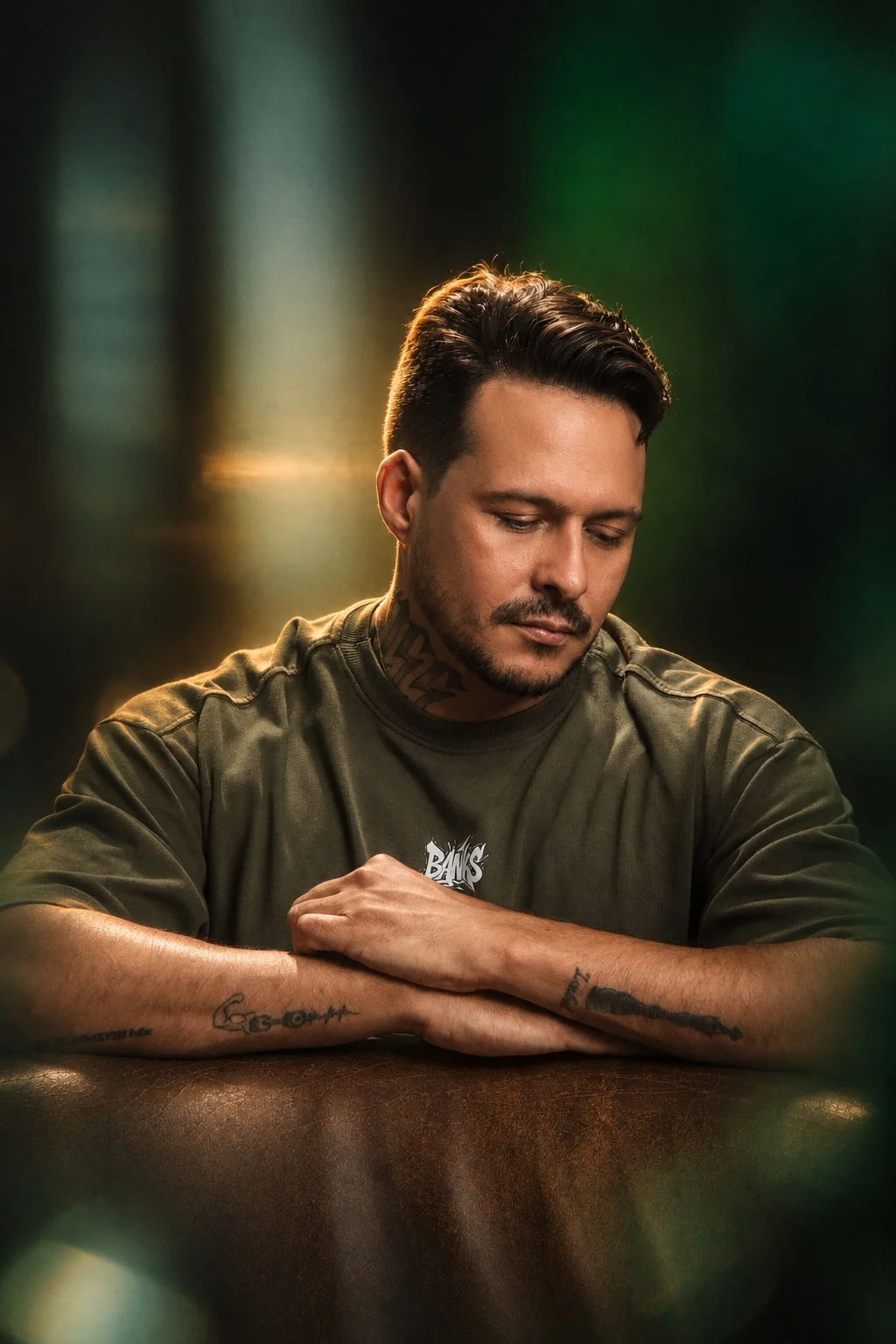
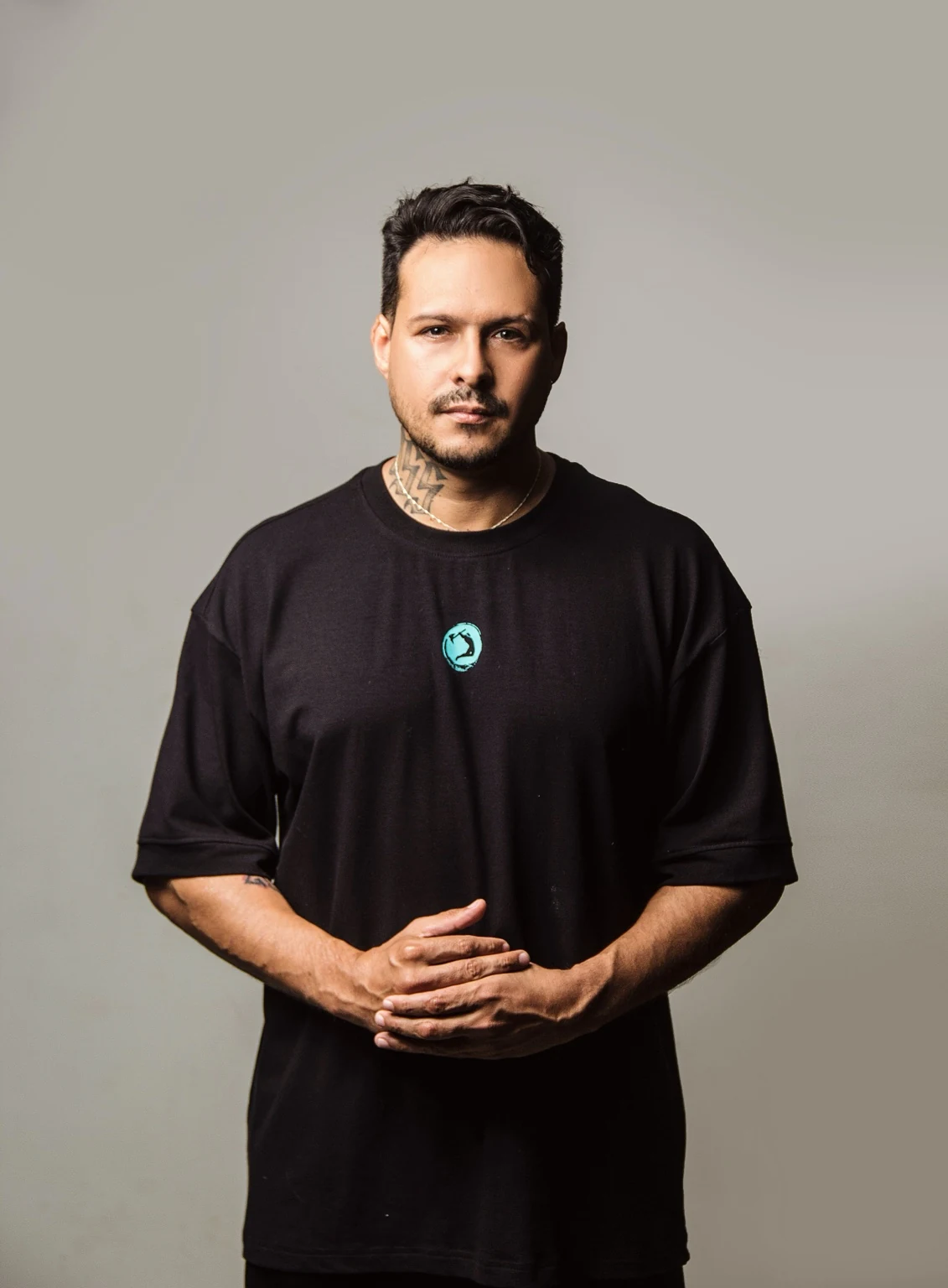
We spoke with Arkyn, a DJ and producer born in Lima and based in Belém, about his path into electronic music, reading the dancefloor, shaping an identity and his new chapter with Frequency.
Before Arkyn existed as an artistic project, what was your relationship with music?
Arkyn: Music has always been part of my life. I was born in Lima, Peru, to a Brazilian mother and Peruvian father, and I started out playing drums at church. I then taught myself other instruments. Listening, understanding and playing music always came naturally to me. Long before I considered it professionally, I already had a strong connection to instruments and making music.
When did electronic music stop being something you listened to and become a professional pursuit?
Arkyn: That happened later. I studied business administration and law and spent many years working as a sales representative. A job opportunity took me to Brasília, where I began meeting people deeply involved in the electronic scene.
Around 32, I started going out more, discovering parties and getting into trance and house in particular. Near the end of the pandemic, seeing Mochakk play in Brasília changed something for me. I bought a controller, began exploring music much more deeply, took a DJ course and started taking it seriously.
You got into DJ booths relatively quickly. What helped you find opportunities at the start?
Arkyn: I was surrounded by people already working in the industry, which mattered a lot. Hopper was my teacher and became a mentor. Spending time with those people, along with the network I was building, brought me close to clubs, parties and many after-hours gatherings.
Opportunities came fairly quickly, but I was also researching constantly and trying to learn from each experience. Being around people with more experience helped me understand how the scene worked beyond simply playing a set.
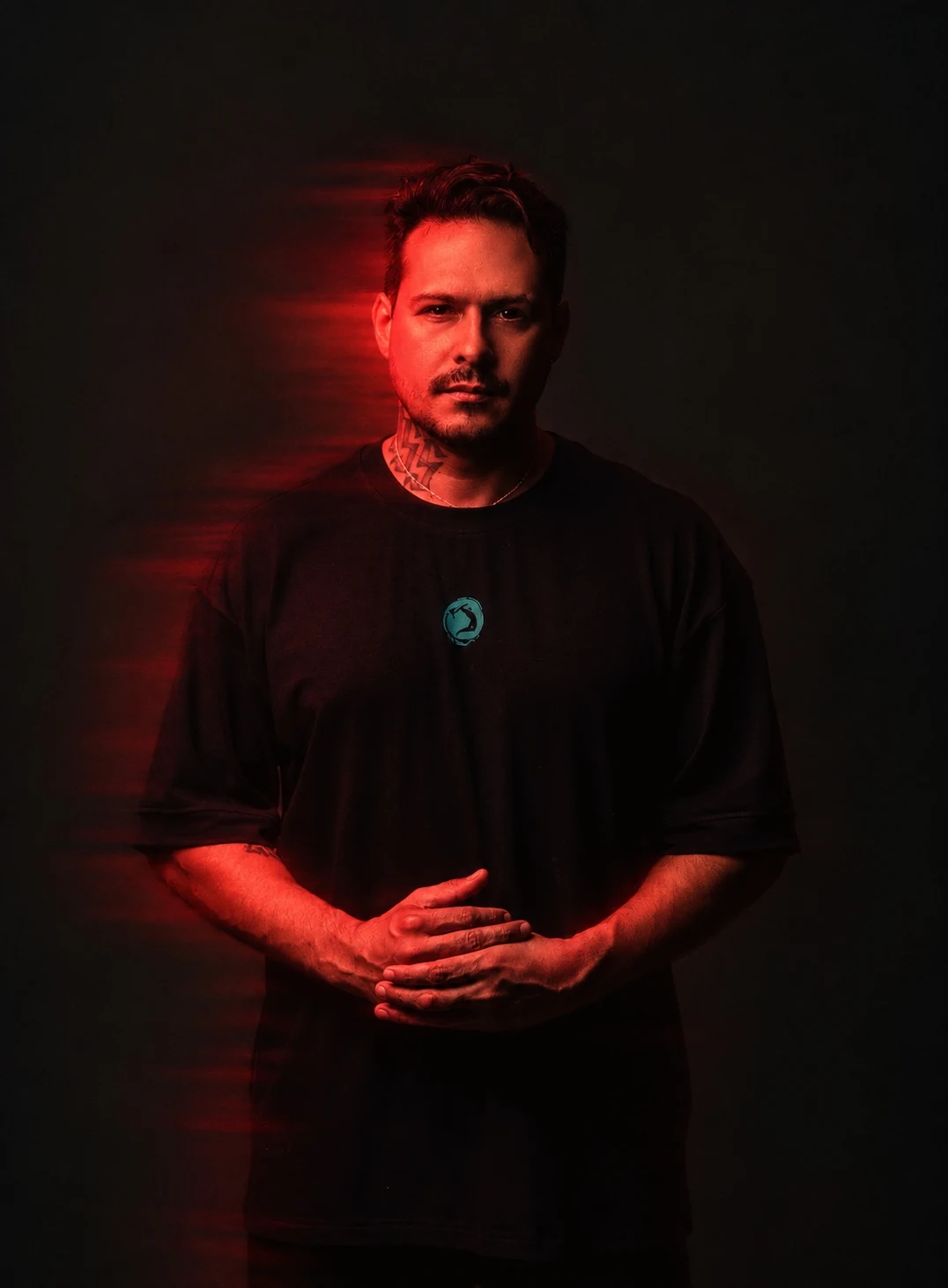
After Brasília you returned to Belém. How did you find your place in a new scene?
Arkyn: When I returned to Belém, I had to build new connections. I got to know the scene and its people, and opportunities to play at major clubs and beach clubs followed naturally.
I've now been DJing for around six years. I also studied music production during that time; for me, it was an almost immediate step. The more music you explore and the better you understand what you play, the more you want to produce and build your own sound.
What guides you when you put a set together today?
Arkyn: Research and reading the room. My sound draws heavily on tech house and house. Tech house is my main foundation, but I don't want it to become a limitation.
I consider myself an eclectic producer and try to understand the context of every performance. I don't believe in arriving with a completely fixed set and ignoring the floor. I like to research deeply and have enough music to steer different situations.
‘Research and reading the room.’
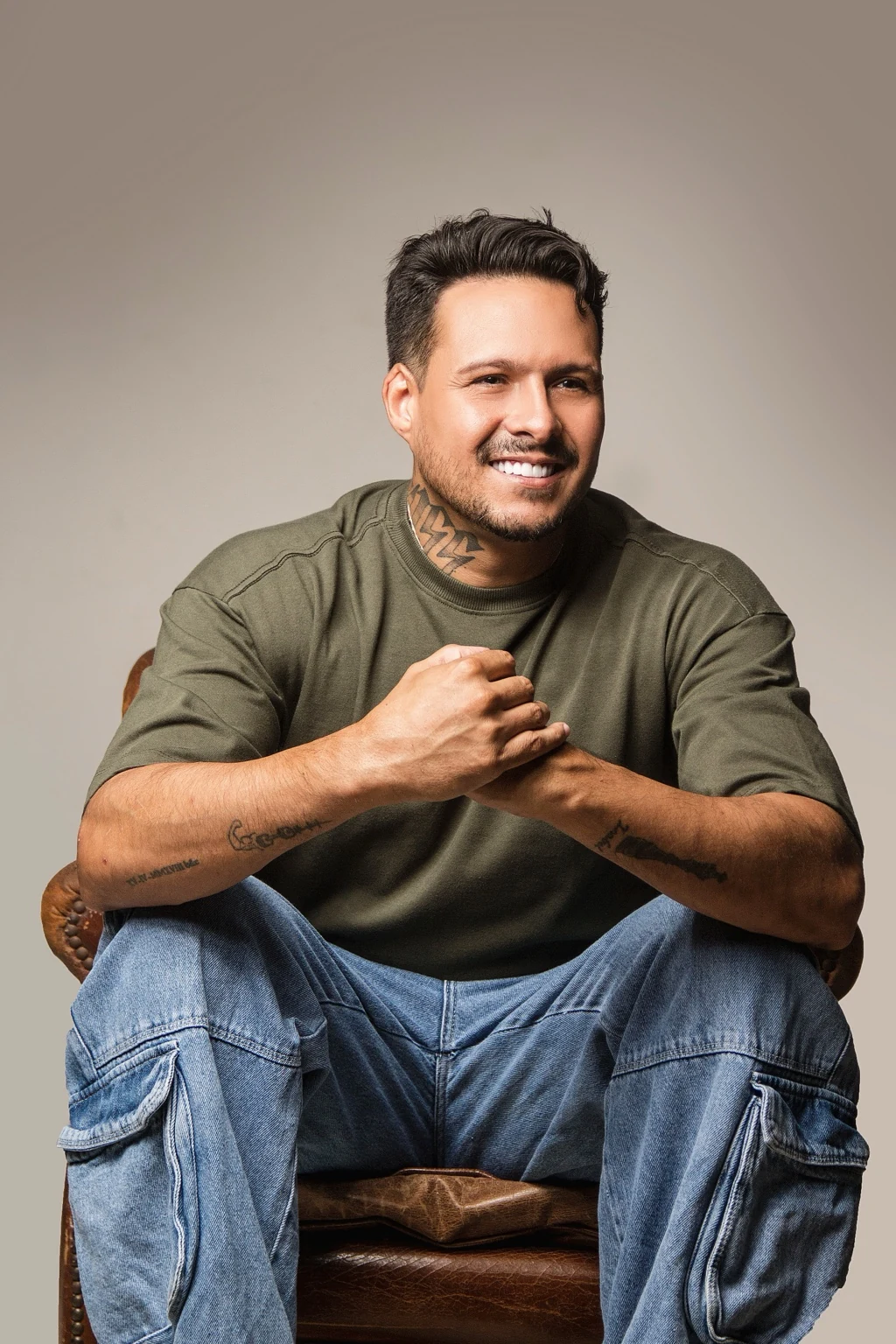
You've shared bills with Kolombo, Barja and Hopper. What have warm-up sets taught you about building a dancefloor?
Arkyn: A warm-up carries real responsibility. You have to understand that it is a particular moment in the night, that the energy is still building and that another artist follows you.
Opening for Kolombo, Barja and Hopper sharpened that awareness. You have to know when to hold back, build and prepare the floor without giving everything away at once. It really refines a DJ's ability to read the room.
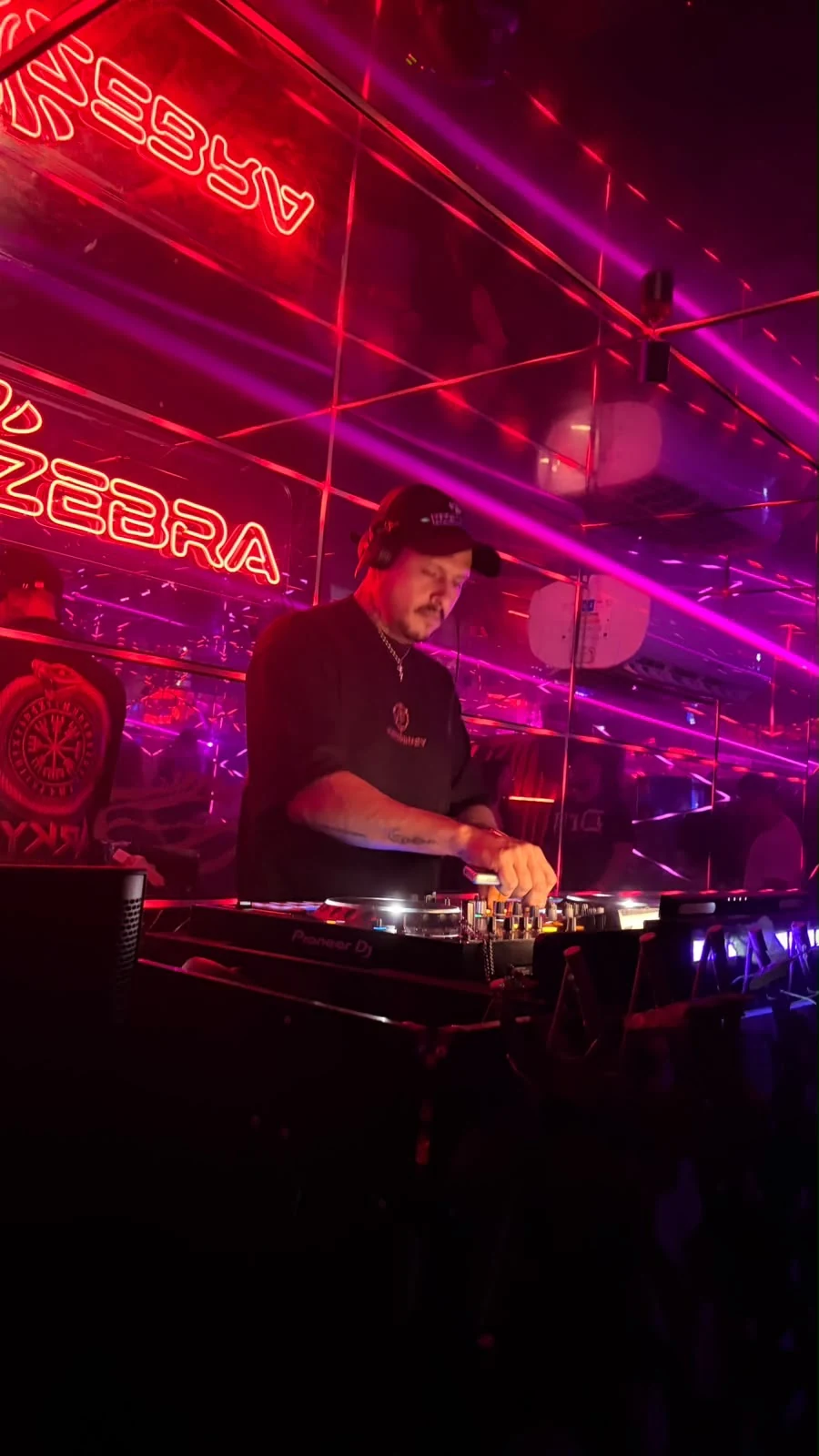
You're now launching Frequency. What prompted you to start your own project at this point?
Arkyn: I'm at a point where I want to build something beyond my individual career. Frequency begins as a label party, with its first edition on the 25th at Club Zebra.
The debut will focus on local artists, but we're already thinking ahead. I want to bring in emerging producers I admire, introduce new names and work with artists beyond the audience's familiar circle.
Music education matters too. I want people to encounter new artists and reference points, beyond what they already know.
Frequency starts as a party, but you already see a broader structure for the brand. How far do you want to take it?
Arkyn: The idea is that Frequency won't be limited to parties. We're building a structure that can work in other areas too, including courses, artist development and booking.
I'm going through a similar process in my own career, seeking knowledge and mentors and working on my visual identity and positioning.
I want to take Arkyn to other Brazilian states and abroad. One major goal is to return to Peru with my music. I was born there and have family and cultural ties, so developing that international side of my career would mean a lot.
Is there a track you see as a turning point, one that changed how you viewed the dancefloor, production or your own career?
Arkyn: The track was “At All”, by Kaytranada. It marked a turning point in my DJ career. That was at Mochakk's show in Brasília, toward the end of the pandemic.
Looking at the scene today, what do you think Arkyn still needs to develop a truly distinct identity within it?
Arkyn: I think my sound is well defined now. The next step is to strengthen that identity through Frequency, always looking for new tracks and moving beyond the obvious.
I want people in the scene to expect musical discoveries: tracks by other DJs and, soon, my own productions too. I want that research and search for new music to become a recognisable part of Arkyn's identity.
‘I want people in the scene to expect musical discoveries.’
Channels to follow Arkyn and hear his music.
The Spotify link opens a search because an official profile could not be confirmed without risking a namesake match.