

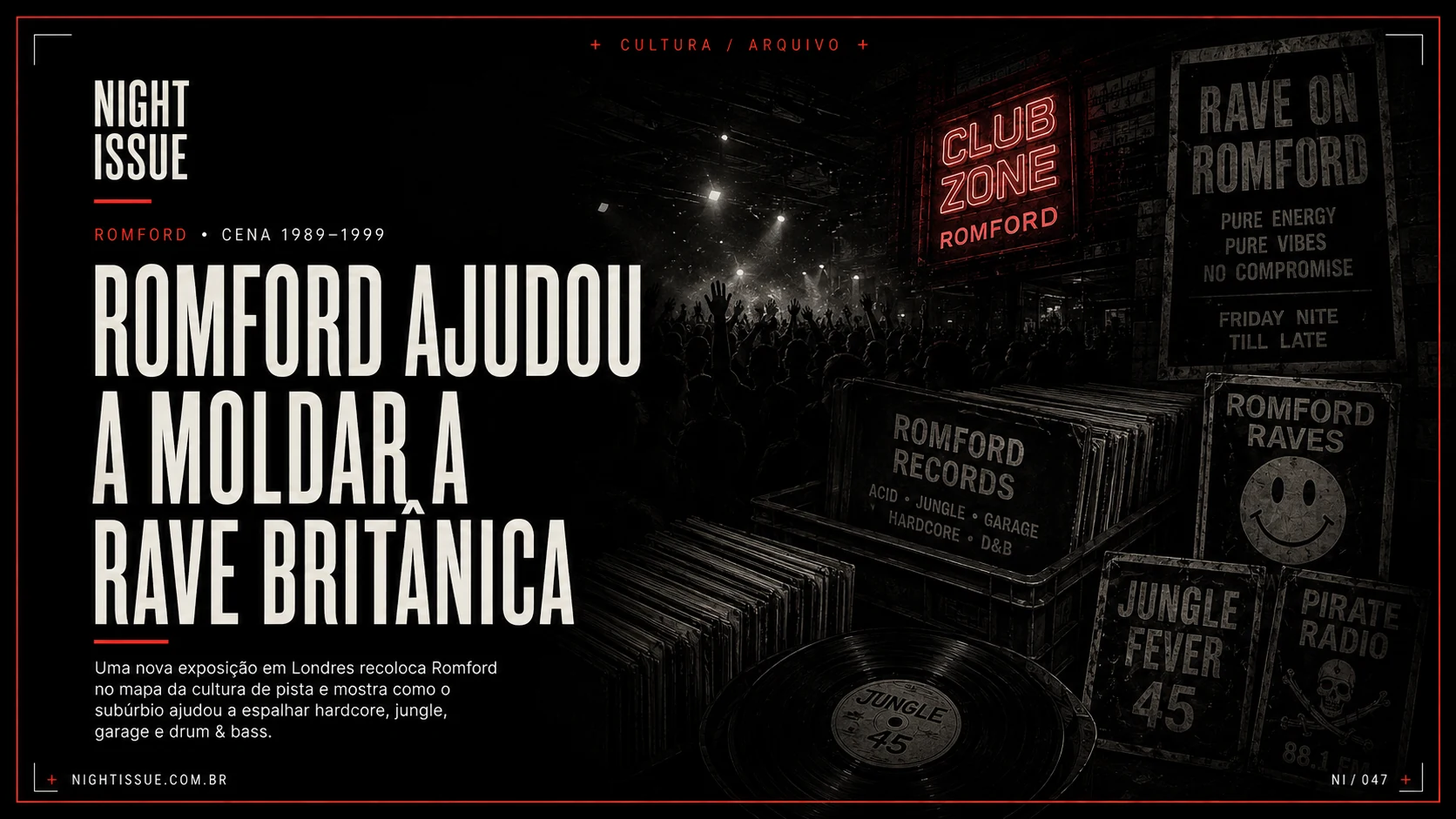
Long before playlists, social media and algorithms shaped how music travelled, local scenes built their own networks of discovery. Between 1989 and 1999, Romford in east London became an important hub for British electronic culture. A new exhibition will bring that decade into focus.
Mega Mega: Romford’s Suburban Sound Revolution will run from October to December 2026. Combining audio, archival material and first-hand accounts, it traces Romford's contribution to the development of hardcore, jungle, garage and drum & bass.
A scene built beyond the city center
Romford's strength did not come from one club or one artist. It grew through links among record shops, independent labels, pirate stations, promoters, producers, dancers and regulars. Boogie Times and the label Suburban Base were central to that network.
That network carried music and ideas beyond the neighborhood to a much wider audience. It also shows how the dancefloor's informal infrastructure — shop counters, pirate broadcasts, flyers, tapes and late-night gatherings — could operate as a cultural distribution system before the internet.
From archive to immersive experience
Recordings, photographs, flyers, tapes, tickets, video and the memories of those who were there will shape the exhibition. The project is also gathering material for a permanent local archive that will remain accessible after the show closes.
One new installation is Bosh, a work by Rosie Strickland that turns a modified VW Golf into a ‘microclub’. The car becomes a place for listening and remembering, combining sound installation, archival references and audience participation to evoke journeys to and from raves.
Why Romford matters
The project reaches beyond nostalgia. Romford reminds us that club culture does not emerge only in major clubs or on global platforms. Often it takes shape at the edges: in record shops, small labels, pirate stations and local communities developing their own language.
Decades later, that structure's influence remains recognizable. Before streaming, the scene already moved among street, shop, radio and rave — and Romford occupied an important place on that map.
Sources consulted
Havering London — Mega Mega: Romford’s Suburban Sound Revolution
DJ Mag — Romford’s ’90s rave scene to be explored in new immersive exhibition
Katherine Green — Mega Mega: Romford’s Suburban Sound Revolution